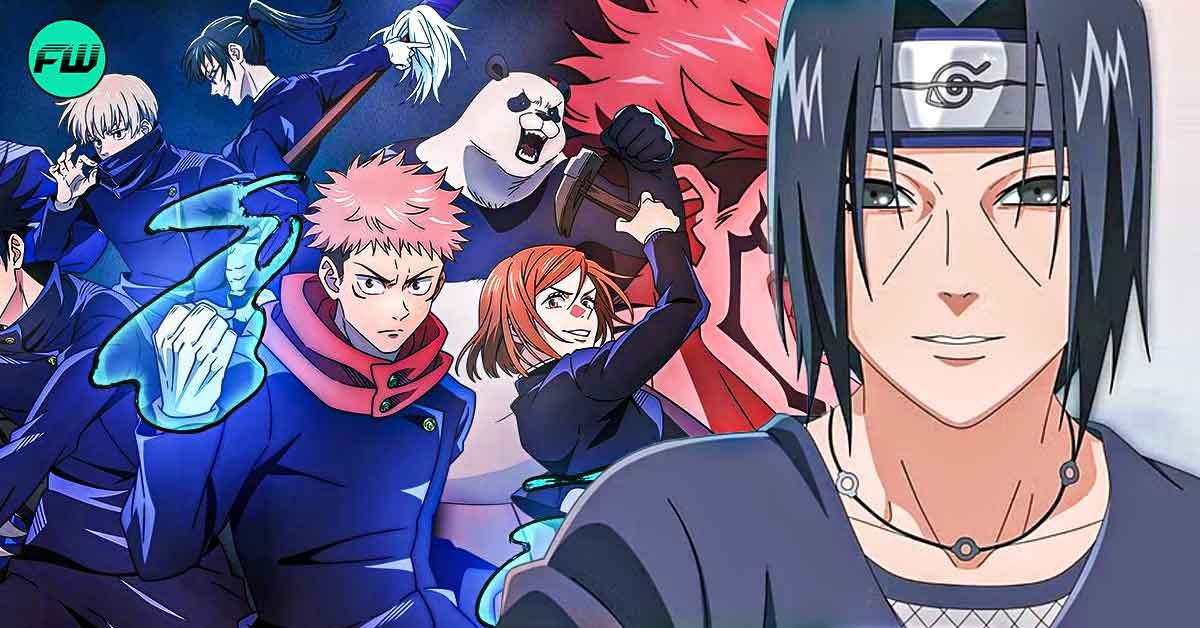
In the vast landscape of anime, where power often dictates fate, few characters resonate as deeply as those defined by their internal struggles. Gojo Satoru, the "strongest sorcerer" of Jujutsu Kaisen, and Itachi Uchiha, the prodigal shinobi of Naruto, stand as towering figures of immense strength. Yet, peel back the layers of their formidable abilities, and you'll discover a startling parallel: a shared "fatal weakness" born from an excess of humanity. This isn't just a casual comparison; it's a deep dive into how an inability to make the most demanding, even cruel, judgments ultimately shaped their destinies and, arguably, the worlds they sought to protect.
Join us as we explore how these two legends, despite their contrasting worlds, are bound by the very compassion that made them human, and ultimately, vulnerable.
Gojo Satoru's Humanity: The Crushing Cost of Compassion
Gojo Satoru, the very embodiment of power in Jujutsu Kaisen, came into the world disrupting its delicate balance. A "six-eye user" whose birth alone signaled a new era, his capabilities are legendary. He effortlessly navigates threats that would cripple others, confronting multiple formidable curses like Mahito, Jogo, Choso, and Hanami simultaneously during the harrowing Shibuya arc. However, it was precisely in this moment of ultimate pressure that his humanity became a critical vulnerability.
Faced with a choice between absolute victory and civilian lives, Gojo activated his Domain Expansion for a mere 0.02 seconds—just long enough to paralyze his enemies without incinerating the innocent bystanders caught in the crossfire. This seemingly noble act of restraint, this refusal to sacrifice, allowed the curses to escape, triggering a cascade of catastrophic events that would plunge the world into deeper chaos. To fully appreciate [the nuanced portrayal of Gojo Satoru's core humanity], one must understand the impossible dilemmas he constantly faced. Furthermore, his profound loyalty and "soft side" prevented him from destroying the body of his best friend, Geto Suguru. This agonizing decision left the door open for Kenjaku to possess Geto's corpse, leading to untold suffering and Gojo's eventual sealing and branding as a criminal. Delve deeper into [the full breakdown of Gojo's pivotal choices during the Shibuya Incident] to understand the immediate and long-term repercussions of his compassion.
Itachi Uchiha's Burden: A Brother's Love and a Village's Protection
Mirroring Gojo's dilemma, Itachi Uchiha, a prodigy of the Uchiha Clan in Naruto, similarly carried a burden of humanity that proved to be his ultimate undoing. Proclaimed the most talented Uchiha ever, Itachi was a shinobi of unparalleled skill and intellect, instrumental in saving the Leaf Village on numerous occasions. Ordered by Konoha leadership to eliminate his entire clan to prevent a devastating coup d'état, Itachi committed the horrific act, yet could not bring himself to complete the mission without exception.
Driven by an overwhelming, deep "soft side" and unwavering love for his younger brother, Sasuke, Itachi spared only him. To ensure Sasuke's safety and to fuel his growth, Itachi deliberately fostered the misconception that he had murdered their family in cold blood, an act designed to set Sasuke on a path of revenge strong enough to eventually kill Itachi himself. This profound act of self-sacrifice, prioritizing his brother's future over his own reputation and life, culminated in Sasuke ultimately taking his life. To grasp the full emotional weight, consider exploring [the full, tragic story of Itachi and Sasuke's brotherly bond]. Discover [the complex layers of Itachi Uchiha's humanity] and how his deepest affections shaped his most brutal decisions.
The Parallel Paths: Where Humanity Becomes a Fatal Weakness
The parallels between Gojo and Itachi are striking. Both characters, burdened by unimaginable power and responsibility, made choices driven by empathy and a refusal to be utterly ruthless. For Gojo, it was the refusal to sacrifice civilians in Shibuya, leading to the escape of dangerous curses and his eventual sealing. For Itachi, it was the refusal to kill Sasuke, leading to years of suffering for his brother and his own demise. In both instances, their profound humanity, often seen as a virtue, manifested as a fatal flaw in the face of absolute, world-altering decisions.
This shared trait illustrates a profound truth about powerful characters: sometimes, the very qualities that make them relatable and heroic—their love, their compassion, their desire to protect—can become the greatest impediments to achieving their larger goals or ensuring the greater good. Their stories force us to question the nature of sacrifice and whether a leader, no matter how powerful, can afford the luxury of a "soft side" when the fate of an entire world hangs in the balance.
Unpacking Itachi's Legacy: Beyond the Massacre
Itachi's life was a tapestry woven with sacrifice, deception, and unwavering loyalty to his village and brother. His story is far richer and more complex than the infamous Uchiha Clan Massacre initially suggests. For two years, he served diligently in Konoha's Anbu, providing critical intelligence on his clan's coup plans, silently carrying the weight of an impending tragedy. His deep friendship with Shisui Uchiha, who possessed the subliminal manipulation abilities of the Mangekyo Sharingan, further complicated his path. After Danzo Shimura stole one of Shisui's eyes, Shisui entrusted his remaining eye to Itachi before committing suicide, a truth Itachi bravely concealed.
Later, Itachi joined the criminal organization Akatsuki, not out of malice, but as a double agent, protecting Konoha from the shadows by monitoring emerging threats. For a deeper understanding of [Itachi's true motivations and actions within the notorious Akatsuki], his role was critical. His final battle with Sasuke was a meticulously orchestrated affair, where Itachi, using his Mangekyo Sharingan, drew out and sealed Orochimaru from Sasuke's body with the mythical Totsuka blade, all while battling a mysterious illness. As a final act of protection, he even implanted his Amaterasu technique within Sasuke, a safeguard against Tobi (Obito Uchiha) revealing the full, traumatic truth of the clan's slaughter. To learn [the complete, hidden truth behind the Uchiha Clan Massacre], one must trace the intricate web of Itachi's life.
During the Fourth Great Ninja War, Itachi was resurrected by Kabuto Yakushi using the forbidden Edo Tensei, an Impure World Reincarnation Technique. Regaining his free will, he immediately sought to end the war, sealing Nagato and confronting Kabuto. Itachi masterfully used the Izanami technique, a powerful genjutsu that traps its target in an eternal time-loop, to compel Kabuto to release the Edo Tensei, thereby freeing countless resurrected shinobi. Explore [Itachi's remarkable actions and legacy during the Fourth Great Ninja War] to witness his selflessness even in death. In his last moments, Itachi projected his memories to Sasuke, revealing the full story of the Uchiha Clan Massacre and expressing his unwavering love, culminating in Sasuke abandoning his desire for revenge and committing to protect the village – Itachi's ultimate wish fulfilled. Understand [the detailed explanation of Itachi's formidable Mangekyo Sharingan abilities] and their mythological origins. For the full strategy and meaning behind his final fight, discover [the intricate strategy and significance of Itachi's final confrontation with Kabuto].
Itachi Uchiha's enduring popularity is no accident; he ranked as the second most popular character globally in a 2023 Naruto manga poll. His story is rich with mythological references, from his Mangekyo Sharingan abilities like Susanoo, Amaterasu, and Izanami mirroring Japanese deities, to Orochimaru's transformation into the mythical Yamata-no-Orochi, and the Nine-Tails, one of the nine tailed-beasts. It's this depth, this profound humanity intertwined with immense power and tragic choices, that continues to captivate audiences worldwide. Discover [why Itachi Uchiha remains one of anime's most beloved and complex figures].
The Enduring Resonance: Why These Characters Captivate Us
The stories of Gojo Satoru and Itachi Uchiha serve as powerful reminders that even the strongest among us are bound by the threads of humanity. Their "fatal weakness"—an excess of compassion and an inability to make the most brutal, yet strategically necessary, decisions—ultimately led to their suffering and, in many ways, shaped the trajectories of their respective worlds. Their tales invite us to ponder the true meaning of strength, sacrifice, and the complex morality inherent in leadership. It's in these struggles, these deeply human flaws, that their legends truly shine, securing their places as two of anime's most compelling figures. As new chapters unfold in Jujutsu Kaisen and the legacy of Naruto endures, the conversation around these nuanced heroes will undoubtedly continue, inviting us to delve ever deeper into the heart of what it means to be powerful, and profoundly, human.